
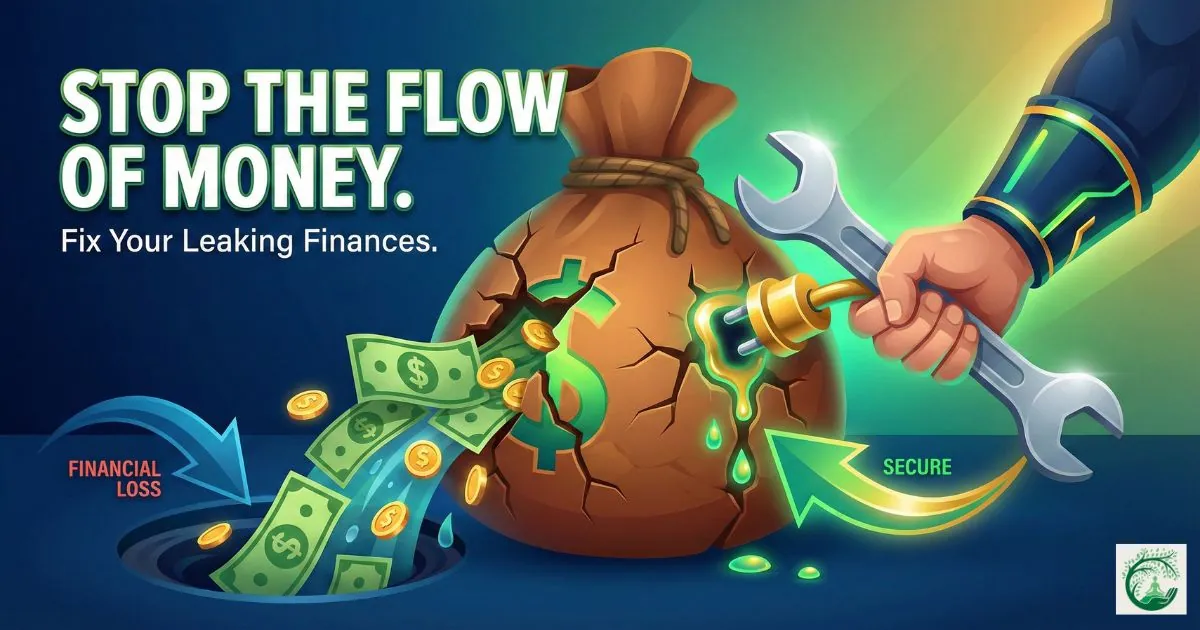
We all know that earning money is difficult. Because earning money requires a lot of hard work. But saving money or managing it properly is even more difficult. Often, we see money coming in, but by the end of the month, that money is no longer in our hands.

Today, through this article, we will discuss why money slips away, the psychology behind it, and how we can control this outflow. We will address all these issues and more.
Why does the flow of money stop?
There are many reasons why the flow of money stops, one of the main reasons being that we spend too much on unnecessary things. However, we have discussed some points below; please read them carefully.
Indiscriminate Spending
I told you at the very beginning that managing money is very difficult, and those who spend indiscriminately face the most problems. Many people spend money without any plan, for example:
- Shopping without thinking.
- Buying unnecessary things because of double-deal offers.
- Spending excessively with friends.
This type of spending stops the flow of money right from the start.
Lack of Budget or Unintentional Deviation from Budget
Many people think, “I’m earning today, so I can worry about spending later.” But spending without a budget is like throwing money into a bottomless pit. Because you don’t have control over what percentage of your income you are spending, and unknowingly, we spend so much that we don’t have any money left at the end of the month.
Lack of Savings
Even with a high income, if there are no savings, we face many problems:
- We don’t have any money on hand.
- We have to take installments or loans in emergencies.
- We cannot plan for the future.
We also face many other problems. We can solve these problems by reducing excessive spending and through proper money management.
The Burden of Loans and Installments
When we spend excessively, we cannot properly manage our credit card balances and EMI loans.
And our income and expenses become equal to or greater than each other. And we face the burden of loans and EMIs. If these are not managed properly and the money is not invested or used in the right places, the burden of these loans remains.
How can you control or stop the outflow of money?
We make all our unnecessary expenses without following any systematic method. Because of this, our money management is very poor, and we fall into the trap of loans and various EMIs. Here, we will share some systematic methods that will be effective for you:

Create a budget
How you can create budgets:
- Monthly budget
- Weekly budget
- Expense categories such as how much I will spend on transportation, food, savings, and various bills.
And the most important rule is to set your budget according to your income at the beginning of the month. And save before you spend.
Because the money we don’t save, we easily spend.
Manage your loans
If you have a credit card or any EMI plan, see how you can get them at a lower interest rate.
If the EMIs are too high, refinance or adjust them.
Avoid unnecessary credit card swipes.
For example, if 20-30% of your income is going towards EMIs every month, then it becomes more difficult to maintain your remaining money.
Stop unnecessary subscriptions
Many of us subscribe to various apps or services that we don’t need, just for the sake of status. And there are some subscriptions that we use less, such as:
- Fitness apps
- Unnecessary streaming services
- Services that we don’t need
Carefully check and cancel all these subscriptions.
Start small savings
Save 20-30% of your income every day and every month. And create a savings plan.
And divide your savings into different categories such as emergency fund, investment, etc. We know that it might seem a little difficult at first, but it’s not difficult; developing the habit is what matters.
Keep track of your expenses
Maintain a small list of your daily expenses so you can track where your money is going and how much you’re spending on unnecessary things, for example:
- What did you spend today?
- How much money?
- Was the expense incurred today truly necessary?
Doing this will help you understand where your money is flowing the most.
Develop proper financial discipline
For sound financial management, we first need to develop proper discipline, such as:
- Reduce impulse buying.
- Avoid unnecessary EMIs or loans.
- Review your finances every month.
Often, a negative mindset hinders effective money management. Therefore, changing your mindset is crucial.
Read More: Napoleon Hill’s 10 Success Laws That Can Transform Your Life
Mindset Shift Important
Many people have misconceptions about money, such as:

- Losing money means the end.
- Money means trouble.
- Earning money is difficult.
All of these are negative mindsets. Instead, think that:
- Money is a resource.
- Money comes as energy.
- Proper management increases money.
If you have a positive attitude towards money, it comes easily and doesn’t leave easily.
Personal Example
Let’s say your monthly income is $5000. Here’s how you can utilize this money; we are giving some examples:
- Savings = 10%
- Bills = 30%
- Transport = 20%
- Entertainment = 10%
- Emergency = 30%
If you utilize your money this way, savings will come first, thus reducing the “flow” of money.
Conclusion
The reason we have little or no money left at the end of the month is due to our small, poor financial decisions, uncontrolled spending, and lack of planning. No matter how much you earn, if you don’t control your cash flow, both your financial security and peace of mind will suffer.
By creating a proper budget, tracking expenses, reducing unnecessary subscriptions and debt, and developing a positive money mindset, you can easily stop the unnecessary outflow of money. Remember, money is not just about earning; it’s about managing.
If you make conscious decisions and change small habits today, in the future, your money will not control you, but you will control your money. And that’s where financial stability, security, and long-term prosperity begin.